Warp Raises $60M Series B to Challenge Workday, Rippling, and ADP in AI-Native Payroll Compliance
Warp has raised $60M in Series B funding led by Battery Ventures, with Peak XV, Sound Ventures, Y Combinator, and HOF Capital participating. The AI-native startup automates payroll, onboarding, tax compliance, IT management, benefits brokerage, filings, and W-2s.
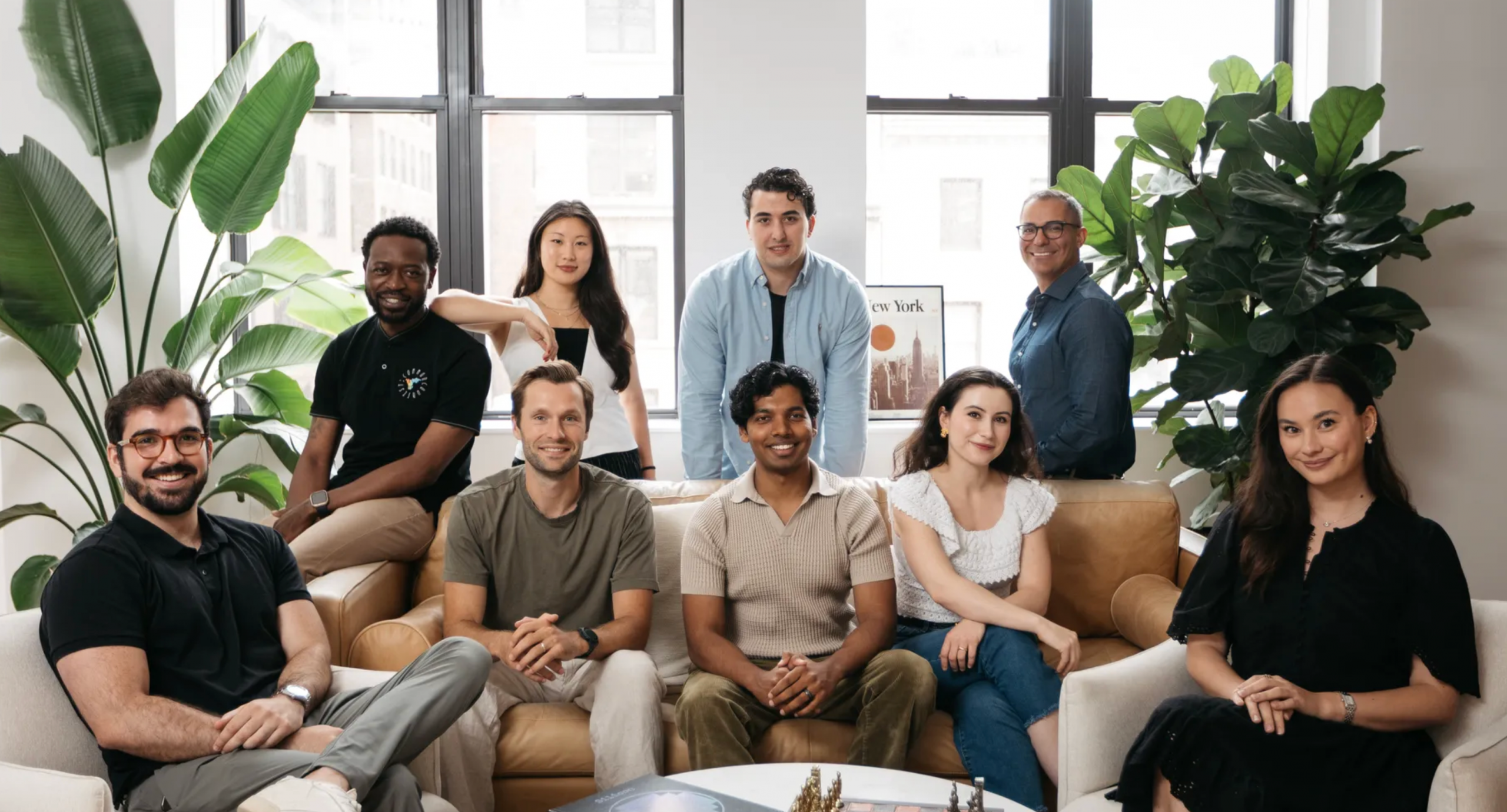
The AI-native employee management startup is betting that automated payroll compliance, tax filings, onboarding, and benefits workflows can redefine how companies manage HR operations.
June 2026 — Warp, an AI-native startup focused on payroll compliance and employee management, has raised $60 million in Series B funding, according to an exclusive report by Axios. The round was led by Battery Ventures, with participation from Peak XV, Sound Ventures, Y Combinator, and HOF Capital.
The financing comes as investors continue to back a new generation of AI-native HR and workforce management companies seeking to challenge large incumbents in payroll, human capital management, and employee operations. Warp is positioning itself against established players such as ADP and Workday, as well as newer platforms including Rippling, Deel, and Gusto.
Founded around the idea that compliance-heavy HR operations can be automated through AI-native infrastructure, Warp helps companies manage payroll, new hire onboarding, tax compliance, IT management, benefits brokerage, state registrations, quarterly filings, W-2s, and income tax withholding calculations. The company’s core differentiation is its focus on compliance, an area that remains one of the most complex and operationally burdensome parts of payroll and employee management.
Warp CEO Ayush Sharma told Axios that there are more than 10,000 tax jurisdictions in the United States alone. For employers, this means payroll compliance can quickly become difficult to manage as companies hire across multiple states, support remote employees, or expand into new locations. Warp’s platform is designed to track regulatory changes, flag required updates, suggest changes to paperwork, and reduce the need for HR and operations teams to manually visit government websites to complete filings.
The company’s AI agents can automatically fill out required forms, calculate income tax withholdings, register businesses in different states, process quarterly filings, and prepare W-2s. The broader vision is to move HR operations away from manual compliance tracking and toward a system where software identifies the right compliance action and brings humans in only when necessary.
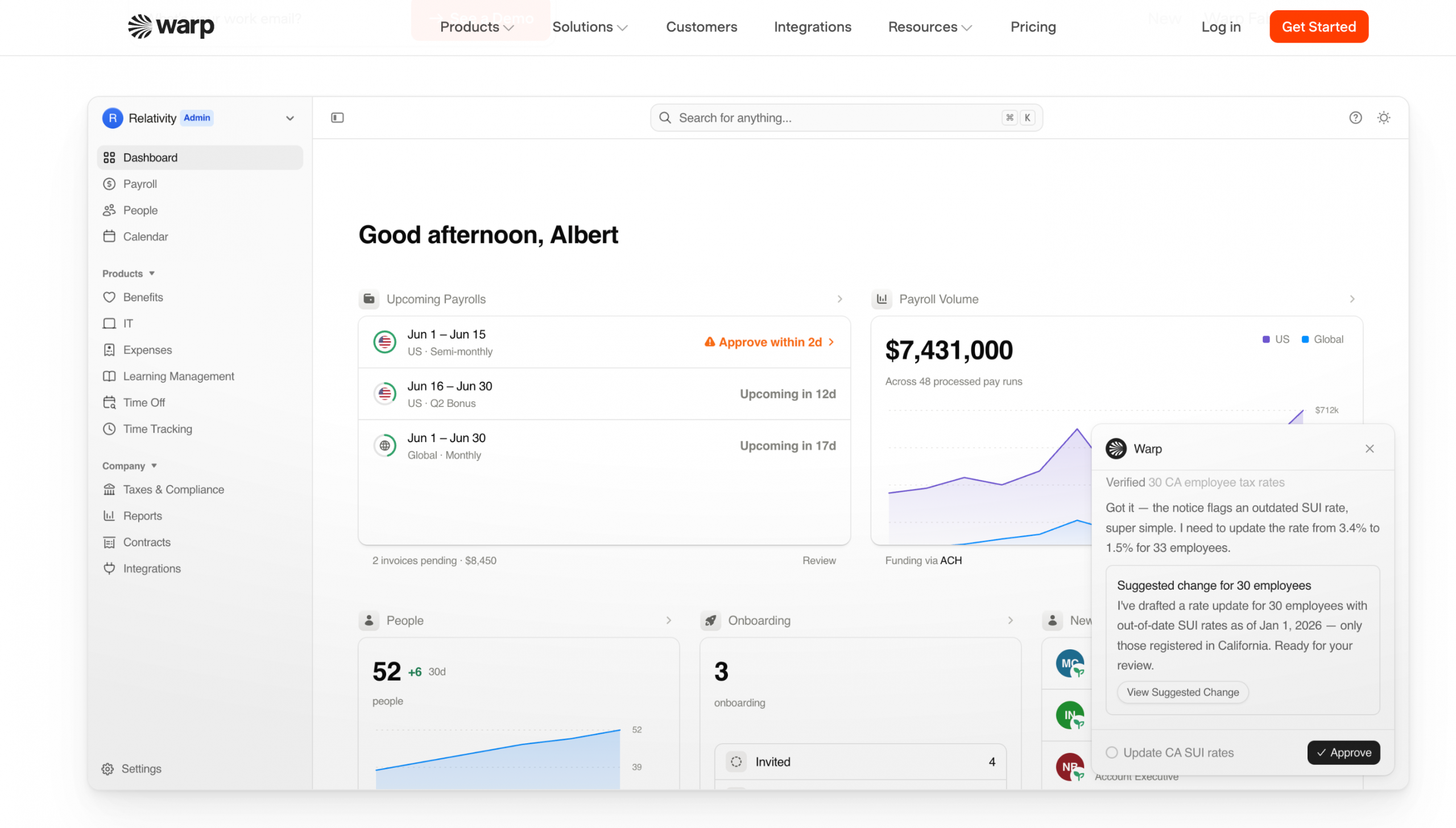
“I think the hard part is just having an architecture that… only flats the relevant action items to the humans as the last resort,” Sharma told Axios. “I think is the future of running companies.”
Battery Ventures General Partner Michael Brown emphasized that payroll is a long-established category, but one where the hardest operational challenge remains compliance. Payroll processing has existed for more than 70 years and has improved over time, Brown said, but compliance remains the most difficult part of the market.
For HR leaders and business operators, Warp’s funding reflects a broader shift in the HR technology market. AI is no longer being applied only to content generation, chatbots, or workflow recommendations. Increasingly, AI-native platforms are moving into execution-heavy back-office functions where accuracy, compliance, auditability, and operational reliability matter.
This shift is especially relevant for small and mid-sized businesses, high-growth startups, and distributed teams that may not have large internal HR operations departments. In these companies, payroll compliance, tax registrations, benefits administration, and multi-state employment rules often create significant administrative burden. Warp is seeking to turn those fragmented compliance tasks into automated workflows managed by AI agents.
The market opportunity is large, but the competitive environment is also intense. ADP remains a deeply entrenched payroll provider with scale, trust, and long-standing customer relationships. Workday holds a strong position among enterprise HCM customers. Rippling has built a fast-growing platform across HR, IT, and finance operations, while Deel and RemotePass have gained traction in global workforce management and cross-border employment.
Other AI-native and next-generation workforce platforms are also raising capital. According to Axios, Niural recently raised $21 million in additional Series A funding, while RemotePass secured $17.4 million in Series B funding in May.
Despite the strength of incumbents, investors appear to believe that payroll and employee management remain large enough for new entrants to gain meaningful share. Brown told Axios that ADP will likely continue to exist because payroll is a sticky category, but he also believes the market is large enough for new companies to take share.
Warp’s Series B funding underscores a key direction for the future of HR technology: the next wave of competition may not be defined simply by broader HR software modules or better user interfaces, but by the ability to automate regulated, high-stakes operational work. For employers, that means AI-native HR infrastructure could become a more active layer in payroll, tax compliance, benefits, onboarding, and employee administration.
As AI continues to move deeper into enterprise operations, platforms like Warp are testing whether compliance execution can become a core competitive advantage in HR technology. If successful, Warp could represent a new category of AI-native employee management systems built not only to record HR processes, but to carry out complex compliance actions on behalf of businesses.